
TMR stands for tunnel magnetoresistance. A TMR joystick reads the stick's position from a small magnet and a magnetic sensor, so nothing rubs and there is no track to wear out. Like Hall effect sticks, TMR sticks resist drift, but they use far less power: GuliKit quotes about 0.1–0.3 mA for its TMR sticks versus roughly 0.5–2 mA for Hall effect.
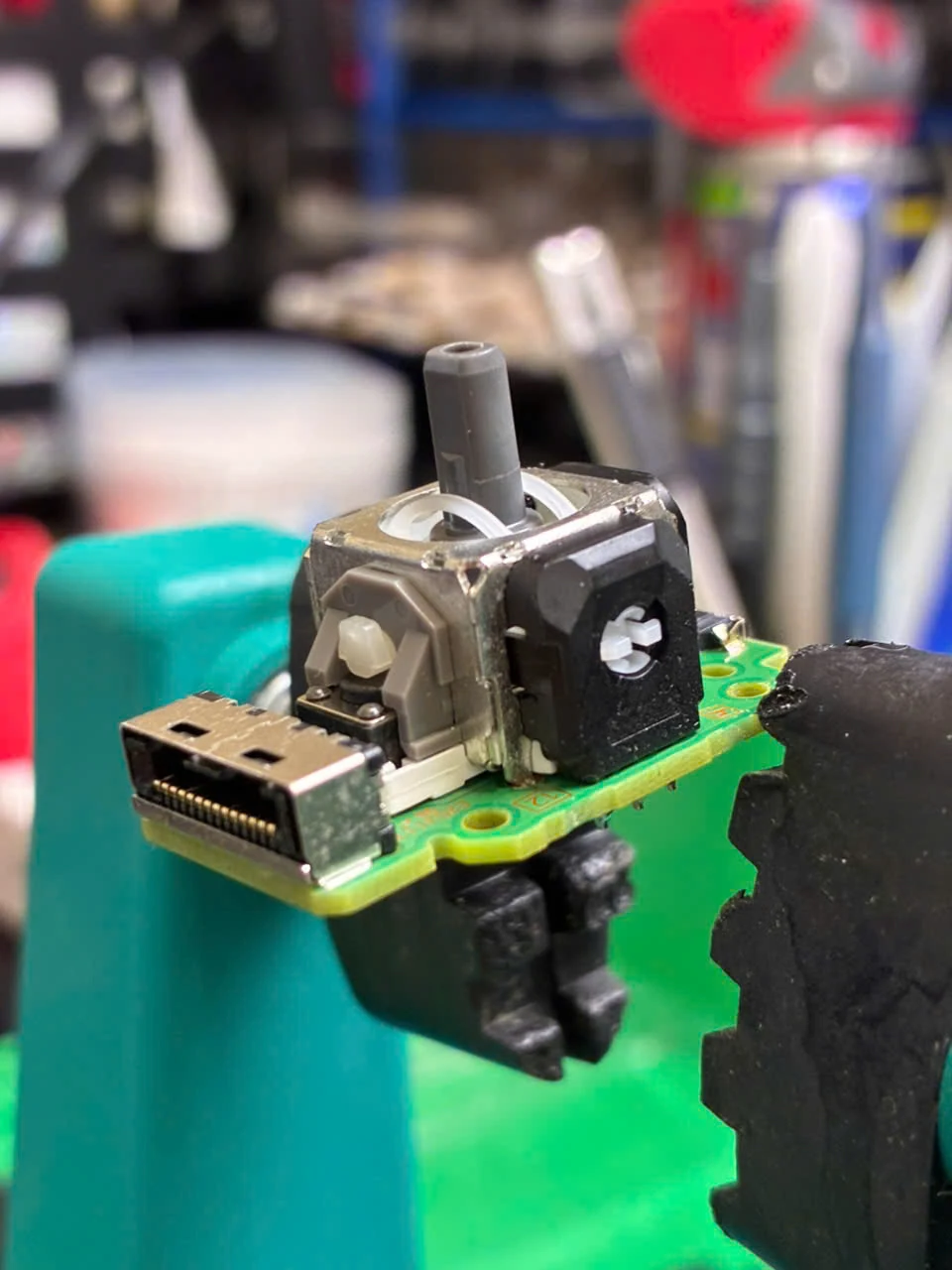
Three types of joystick
Every analog stick has to turn a physical tilt into a number. There are three common ways to do it.
- Standard sticks (potentiometers). This is what comes in most stock PS5, Xbox and Switch controllers. Each axis has a carbon track with a small metal wiper sliding over it. Where the wiper sits changes the resistance, and the controller reads that as position.
- Hall effect sticks. A magnet moves with the stick, and a Hall sensor underneath measures the magnetic field. Nothing touches.
- TMR sticks. Also a magnet and a sensor with no contact, but the sensor uses tunnel magnetoresistance, which gives a strong signal from very little current.
Why standard sticks drift
The wiper rubs on the carbon track every time you move the stick. Over months of play the track wears unevenly and dust gets in, so the reading at rest is no longer "centre". That's stick drift. Cleaning can help for a while, but the worn track is still worn. More on stick drift and how to fix it.
How TMR works
A TMR sensor is a tiny sandwich: two magnetic layers with an extremely thin insulating layer between them. One magnetic layer is fixed; the other turns to follow the magnet in the stick. Electrons can "tunnel" through the insulating layer, and how easily they do depends on whether the two magnetic layers point the same way. So as the stick tilts, the sensor's resistance changes smoothly, and the controller reads that as position.
Because the change in resistance is large, the sensor doesn't need much current to give a clean signal. That is the main practical difference from Hall effect sensors.
TMR vs Hall effect
| Standard | Hall effect | TMR | |
|---|---|---|---|
| How it senses | Metal wiper on a carbon track | Magnet + Hall sensor | Magnet + tunnel magnetoresistance sensor |
| Parts that rub | Yes | No | No |
| Drift from wear | Common over time | Very unlikely | Very unlikely |
| Power draw | Very low | About 0.5–2 mA* | About 0.1–0.3 mA* |
| Cost to fit | Lowest | Higher | Higher |
*Figures published by GuliKit for its own sticks (reported by The Verge and Dexerto).
In short: both magnetic types fix the root cause of drift because nothing wears. TMR adds lower power draw, which matters most in wireless controllers that already have small batteries.
GuliKit TMR sticks
GuliKit is one of the best-known makers of magnetic joysticks. Its TMR replacement sticks were announced in 2024 for the PS5 DualSense, the PS4 DualShock 4, Xbox Series controllers and the Switch Pro Controller. At launch GuliKit didn't recommend them for the DualSense Edge or the Xbox Elite because of calibration. Since then it has released TMR sticks for Joy-Con 2 that fit without soldering, and official TMR modules made with ASUS for the ROG Xbox Ally.
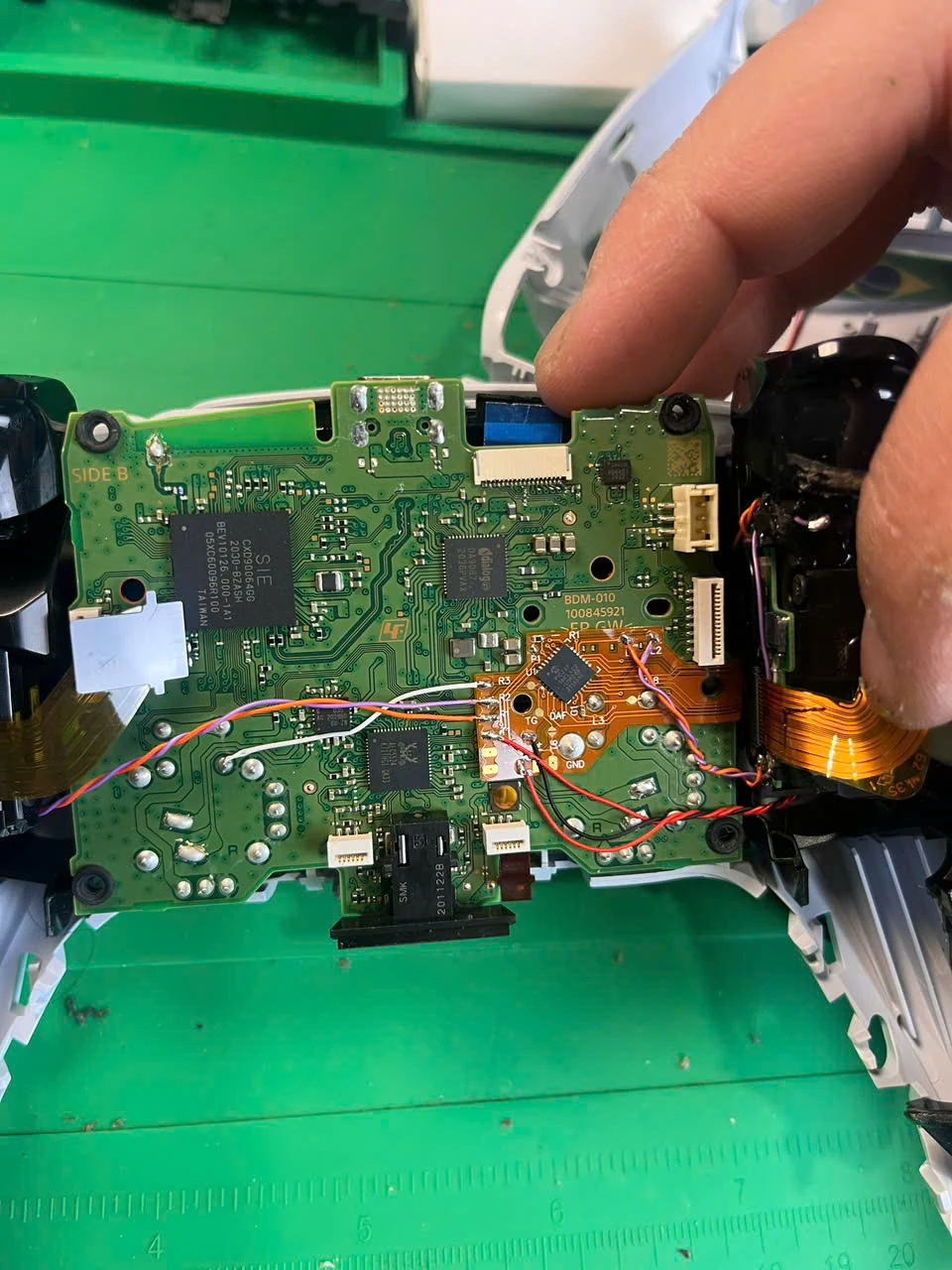
On DualSense and Xbox controllers the stock sticks are soldered to the board, so fitting TMR sticks means desoldering the old modules, soldering in the new ones and calibrating them.
Is it worth it?
- Worth it if your controller has drifted before, you play a lot, you play competitively, or you use an expensive controller (DualSense Edge, Elite Series 2) that you want to keep for years.
- Maybe not if the controller is cheap and barely used, or still under the manufacturer's warranty (opening it can void that).
We've fitted GuliKit TMR sticks to regular DualSense controllers, inside DualSense Edge modules (soldered so the module keeps its calibration) and to an Elite Series 2.
Questions
Is TMR better than Hall effect?
Both are contactless and resist drift. TMR draws less power (about 0.1–0.3 mA vs 0.5–2 mA, according to GuliKit), which helps battery life on wireless controllers.
Do TMR sticks need calibration?
Yes. After fitting, the sticks are calibrated so the centre and full range read correctly. We calibrate and test every stick before you pick it up.
Can TMR sticks go in a DualSense Edge?
Yes. We fit GuliKit TMR sticks inside Edge modules and solder them so the module keeps its calibration.
How much does a TMR upgrade cost?
At Baos Station, $60 for a PS5 DualSense, parts and tax included, with a 6-month warranty.